
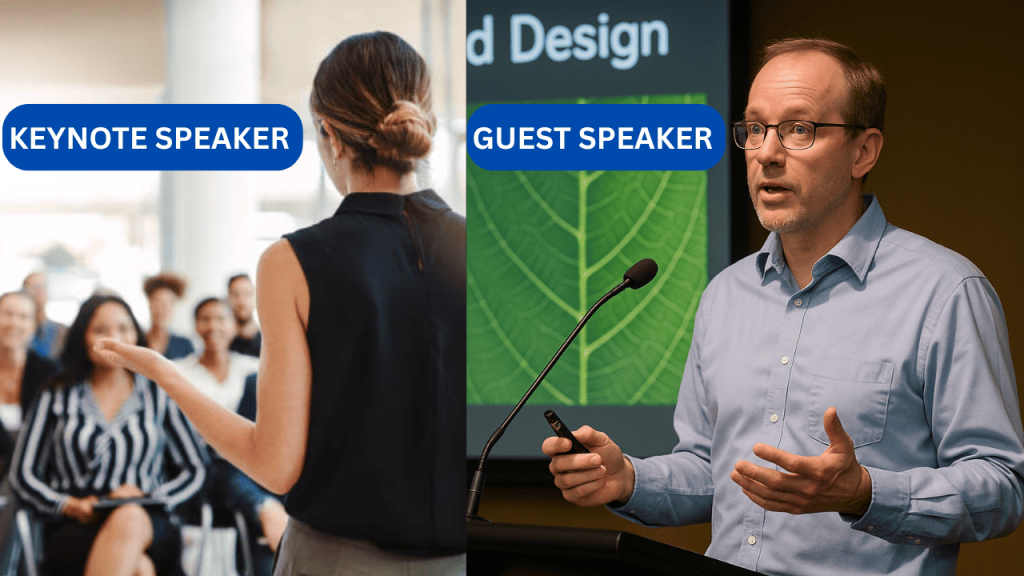
| Key Takeaways 1. Keynote Speakers are the heartbeat of your event. They set the tone, ignite passion, and deliver a message that the audience resonates with long after the event ends. They are ideal for large audiences and offer the vision, the inspiration, and the direction your event needs. 2. Guest Speakers, on the other hand, have an expertise and deliver in-depth knowledge about niche topics or a case study. Perfect for focused sessions and adds credibility and fresh viewpoints. |
Are you planning an event, whether a large conference, a corporate event, or even a product launch?
If yes, then it needs careful consideration, attention to detail, and the right speaker to succeed.
The speakers’ choice can set the event’s tone and influence how the audience engages with the content.
Choosing the wrong speaker can lead to:
- Misaligned expectations between the speaker and the audience.
- Lack of focus on the event theme.
- Wasted potential if the speakers are chosen incorrectly.
When searching for the right speaker, you might come across the terms “guest”, speaker”, and”keynote” speaker.
Although these terms are often used in the same way, they have slightly different meanings. That is why it is crucial to understand the difference between the two types of speakers. Here, we will understand the difference between the two speakers.
What is a Keynote Speaker?
A keynote speaker is a person who delivers the main speech at an event, such as a conference or large meeting, to draw attendees to the program.
What is a Guest Speaker?
A guest speaker is an individual invited to an event, conference, or meeting to share their expertise on a specific topic.
What Are the Key Differences Between a Keynote Speaker and a Guest Speaker?
|
Criteria |
Keynote Speaker |
Guest Speaker |
|
Role |
Serves as a central figure of the event. |
Invited to speak on a specific topic or subject matter. |
|
Audience |
Address the entire audience. |
May address smaller, more focused groups within the larger event. |
|
Focus |
Focuses on themes, trends, or visions and even uses presentation software like PowerPoint to elevate the event’s purpose. |
Focuses on niche topics, case studies, or practical applications related to the event’s theme. |
|
Impact |
Set the stage for the event that leaves a lasting impression and frames the following discussions. |
Enhance the event by providing depth and specialized perspectives. |
|
Examples |
A keynote speaker like John DiJulius inspires audiences by offering transformative insights into customer experience. |
A guest speaker is invited to share their insights on a specific topic, like climate change and innovative solutions for reducing carbon footprints. |
When Do You Need to Hire a Keynote Speaker?

1. When You Want to Enhance the Overall Event Experience:
✓Set the Tone and Theme
A keynote speaker effectively introduces the purpose and theme of the event. This gives context and direction for the rest of the event.
✓Motivate and Inspire Attendees
A compelling speaker can ignite passion, drive engagement, and inspire the audience to take action.
✓Add a Touch of Celebrity or Expertise
A well-known keynote speaker can attract more attendees and generate a buzz for your event.
2. When You Want to Achieve a Specific Outcome
✓To Promote the Event and Brand
A keynote speaker can help promote your event and brand. This leaves a lasting impact on attendees and potential partners.
✓Build a Sense of Community
They can also create a shared experience and sense of belonging among the audience.
✓Drive Business Results
They also help achieve specific business goals, such as increasing leads, sales, or brand awareness.
3. When You Have a Larger Event:
✓Conferences
A keynote speech by a renowned speaker creates a memorable opening experience for the larger events.
✓Corporate Events
They elevate the tone of a corporate event by creating a sense of inspiration and motivation among employees.
✓Workshops and Retreats
They create a valuable learning experience and guide the attendees in a specific direction.
4. When You Want to Make a Statement
✓Announce a Major Initiative or Product
The keynote speakers help announce a product, service, or company initiative.
✓Celebrate a Milestone
The role of keynote speaker is crucial when you want to add a touch of formality and grandeur to an event.
✓Highlight a Particular Theme or Message
They help in conveying a specific message to your audience.
When Do You Need to Hire a Guest Speaker?

✓To Provide Expertise on a Specific Topic
Guest speakers have expertise in a specialized topic that helps the audience understand the topic in depth.
✓To Add Credibility and Attract a Larger Audience
A well-known guest speaker can attract more attendees and increase your event’s visibility.
✓To Offer Fresh and New Viewpoints
A guest speaker from outside your organization can introduce new ideas and perspectives to a topic.
✓To Enhance Opportunities for Networking
They create opportunities for attendees to connect with industry professionals and build relationships.
✓To Help Promote Your Event and Achieve Business Goals
The skilled guest speakers help promote your event and achieve specific marketing goals.
Questions to Ask Yourself Before You Hire a Speaker
Here is set of questions that you should ask yourself first.
- What type of event am I organizing?
- What is the overall tone or atmosphere of the event?
- What is the size of the event?
- Who is the target audience for my event?
- Do I need a keynote speaker or a guest speaker?
- What is the purpose of the event?
- What is my budget for hiring a speaker?
Questions to Ask Before Hiring a Keynote Speaker
If you want to hire a keynote speaker, then ask these questions:
Industry Knowledge and Experience
- Tell me what you know about our industry.
- Have you spoken to audiences similar to our industry?
- What specific challenges or opportunities do you see in our field?
Presentation Style and Audience Engagement
- How do you engage with the audience during your keynote speech?
- Give me an example of how you involve the audience.
- What is your preferred presentation style (e.g., interactive, conversational, motivational)?
- Do you use slides, multimedia, or other visual aids?
- How do you include humor or storytelling in your presentations?
- How do you handle Q&A sessions?
Speaker’s Experience and Audience Fit
- What are the benefits you see for your audience?
- How will your presentation be customized for the audience?
- What do you want the audience to think, feel, or do differently after your keynote?
Logistic and Budget Considerations
- What are your fees and travel expenses?
- Do you have any specific requirements for equipment or stage setup?
- Which dates and times are you available?
- How do you measure the success of your speaking engagements?
Questions to Ask Before Hiring a Guest Speaker
If you want to hire a guest speaker, then ask these questions:
Experience and Expertise
- How long have you been speaking on this specific topic?
- What is your background in this field?
- Have you spoken at similar events before?
- Can you provide references or testimonials from previous clients?
Topic Relevance and Suitability
- How does your topic align with your event’s goals and audience?
- Do you have a strong understanding of the specific challenges or needs of your audience?
- What is your approach to the topic, and how will you engage the audience?
Presentation Style and Delivery
- What is your speaking style (e.g., engaging, informative, humorous)?
- Can you adapt your presentation to the specific needs of your audience and event format?
Technical Needs and Logistics
- Do you have any specific stage or equipment needs?
- How do you prefer to be introduced and thanked?
Financial Details
- What is your fee structure, and what does it include?
- Do you need any promotional materials or information from us?
The Bottom Line
To create an impactful event, it is essential to understand the differences between keynote speakers and guest speakers. Keynote speakers set the tone, inspire, and provide a broad, unifying vision for the event. They are ideal for large gatherings and conferences, motivating and engaging the audience.
On the other hand, guest speakers offer valuable, specialized insights on a specific topic. They are perfect for smaller, more focused sessions where detailed expertise or case studies are needed to enhance the overall experience.
Before you hire a speaker, it is also important to understand the objectives of the event. So, choose the right speaker, whether a keynote speaker or a guest speaker, to leave a lasting impact on attendees.
Frequently Asked Questions (FAQs)
- Can one person be both a keynote speaker and a guest speaker?
Yes, depending on the event’s structure and objectives, a single person can be both a keynote speaker and a guest speaker.
- What is the typical duration of a keynote speaker’s presentation?
A keynote speaker’s presentation typically lasts 30 to 60 minutes, with 45 minutes being ideal. However, many factors affect the duration, such as event format, audience engagement, and some topics that require detailed explanations.
- What are some things to look for in a Keynote speaker?
The most important thing is to look for speakers who can help you reach your audience and deliver your message the way you want it to be delivered, thereby achieving your goals.
- Do keynote speakers take questions?
Yes, keynote speakers do take questions during structured Q&A sessions after their presentations.