
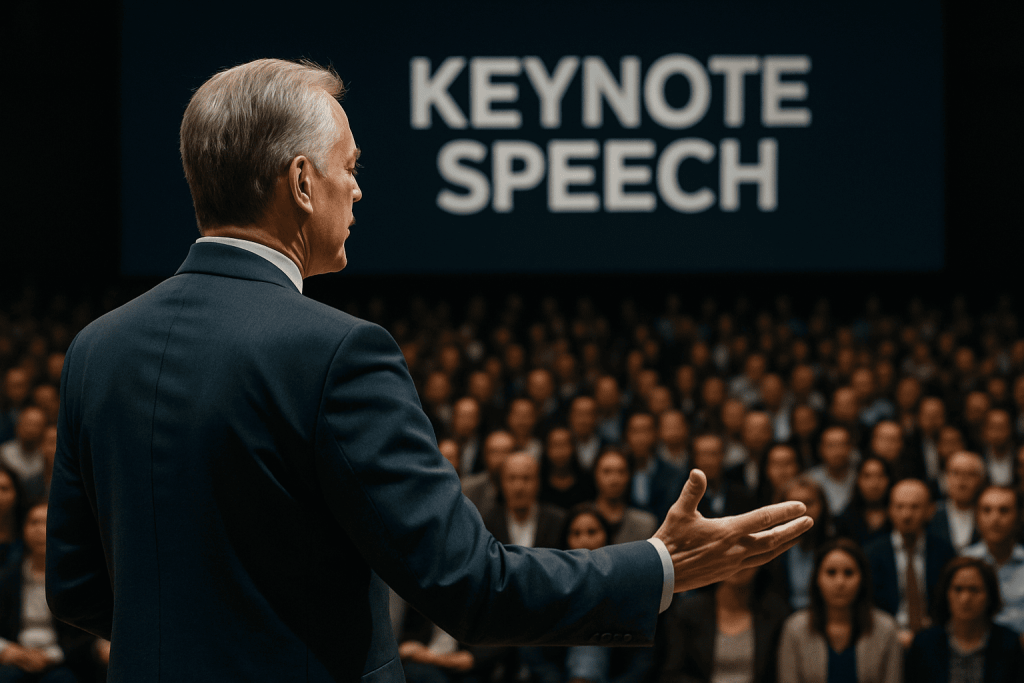
The goal of an event is to create an experience that connects with your audience. Whether it is a corporate conference or a motivational seminar, leaving a long-lasting impression is essential.
This is where a keynote speech comes in. It’s the opening speech by a keynote speaker at a formal event.
Let’s find out what makes a good keynote speech, why it is important, and why a keynote speaker matters more than the keynote itself.
What Makes a Good Keynote Speech?
The following elements make a good speech:
It:
- Contains a strong message.
- Includes personal anecdotes and real-life examples.
- Understands the audience’s needs, interests, and the event’s theme.
- Leaves with actionable key takeaways.
- Inspire the audience to think, act, and feel in a new way.
1. Sets the Tone for the Entire Event
If you don’t set the tone from the very beginning, you risk losing your audience’s attention. When the audience can’t know what is going to come next, they quickly tune out.
So, a keynote speech sets the stage by providing what is going to be discussed. It sparks excitement, curiosity, and energizes the audience for what’s to come.
Example: In John Dijulius’s keynote, he began with a causal, energetic introductory statement: “Well, you know, we all love to get warmed up in here.” It encourages the audience to feel more at ease and open to the upcoming discussion.
2. Highlights the Main Theme or Goals of the Event
The main goal of the event sets the direction for everything that follows. When people understand the core message right away, they are more likely to stay focused and see the value in the event.
So, a keynote highlights an event’s central theme by:
- Introducing the central message from the very beginning.
- Highlighting the main theme with relevant background, examples, or stories.
Example: John Dijulius, in his keynote speech, mentions the core idea of transforming customer service. He says that, “ I was writing my first book Secret Service basically what I was trying to get answered was how do companies like Nordstrom’s Disney and the Ritz Carlton of the world get 50,000 employees associates to execute world-class customer service on a consistent basis while so many of us struggled with a team of 25 150 200?”
This statement clearly states the goal of the event, which is to explore how organizations can improve their customer service by learning from the best.
3. Urges the Audience to Not Just Listen but to Implement What They’ve Learned.
The goal of the keynote isn’t just to inform; it is to inspire action. If the audience only listens without applying what they’ve heard, the event’s value is significantly diminished.
So, an excellent keynote speech script includes stories, real-world examples, and actionable strategies. How a speaker delivers the speech determines the impact of the message on the audience.
Example: In the speech, John urges the audience to implement what they’ve learned by stating this statement:
“If I give you an idea that you like, write it down. If I give you an idea that is so bizarre and crazy and I don’t know our industry, write it down, circle it. That’s the idea worth it.“
This statement encourages the audience to consider “bizarre” or “crazy” ideas worth pursuing. John pushes the audience to think creatively and take action.
4. Provides Insights for the Audience to Rethink Their Current Way of Thinking
Many attendees may approach an event with preconceived notions of their industry, role, or personal potential. If the keynote does not challenge these existing perspectives, then the attendees risk leaving the event with the same mindset they entered with.
So, a keynote includes insights that challenge the audience’s current way of thinking. It urges them to see things differently and question the status quo.
Example: John Dijulius, in his speech, challenges the audience to rethink their traditional mindset of competing based on price. Instead, he urges them to focus on providing an exceptional experience.
5. Keeps the Audience Engaged by Using Captivating Stories and Language
In 2025, people’s attention spans are shorter than ever, at nearly 8 seconds. The audience can quickly tune out if the speech feels dry or disconnected from their interests.
A great keynote includes a personal and relatable anecdote that aims to engage the audience from start to finish.
Example: John Dijulius shares a humorous and relatable story about his son, Johnny, at the pool, illustrating the idea that “customer service” is about doing what is expected in an unexpected situation.
6. Leads to a Stronger Desire for Attendees to Return to Future Events
If the audience does not leave with a strong impact, then they may feel indifferent about future events. They are less likely to attend again or recommend the event.
A great speech by a speaker includes personal stories and even key takeaways that stay with the audience long after the event ends.
Example: Keynote speaker at the end of his speech inspires and motivates the audience to apply the principles he shared and emphasizes the ongoing journey of learning and improvement. The call to action builds anticipation and a desire to continue learning in future events.
Why Does the Keynote Speaker Matter More Than the Keynote Speech?
You have spent countless hours preparing for an event, ensuring every detail aligns with your goals. But when the final day arrives, what truly shapes the event’s success is the keynote’s content and how the speaker delivers it.
So, why does a keynote speaker matter more than the speech itself?
- They embody the message that the audience wants to hear. A keynote speaker gives meaning to the speech.
- An experienced speaker creates a great experience that aligns with the event’s goals.
- They take the time to understand your business, who is attending your event, what they need to hear, and how they need to hear it.
- A speaker provides practical, actionable insights to turn challenges into long-term success.
- They share real-world stories that inspire, entertain, and stay with the audience.
Want a Keynote Speech That Sparks Action and Drives Lasting Change?

We have discussed the importance of a keynote and how a keynote speaker enhances the message of the speech. However, the best speeches are the ones that drive action and leave a lasting impression on the audience. The role of an experienced keynote speaker is crucial.
John Dijulius is a customer experience, culture, and leadership keynote speaker with over 25 years of experience. He delivers high-energy presentations and shares brilliantly simple ideas that your attendees can implement the next day to stand out in their industry. Consider booking a keynote speech with John Dijulius today.
Let’s take a first step towards changing your business, world, and life.
Frequently Asked Questions (FAQs)
1. What is the difference between a keynote speech and a speech?
The keynote is the foundation speech given at the start of an event. It sets the tone from the very beginning. On the other hand, a speech refers to any formal address on a specific topic.
2. What are the two common types of keynote speeches?
The two main types of keynote are inspirational/motivational and informative. Inspirational speeches inspire and uplift the audience, while informative speeches focus on sharing valuable knowledge on a specific topic.
3. How long is a keynote speech?
The specific duration of the speech can vary depending on the event and the client’s needs. Typically, it ranges between 45 and 60 minutes, depending on the event’s format and schedule.
4. Who is the best conference Keynote speaker?
There isn’t a single best keynote speaker, because the ideal choice depends on the specific event’s goals, audience, and desired message.